Yoga is a beginner-friendly form of movement that can help support flexibility, balance, strength, and relaxation. If you are completely new to yoga, you may wonder where to start, what poses to learn, and what equipment you actually need.
The good news is that you don’t need to be flexible or experienced to begin. With a comfortable space, a good yoga mat, and a few simple poses, you can start practicing yoga at home.
Affiliate Disclosure: This article may contain affiliate links. If you purchase a product through one of the links, we may earn a commission at no additional cost to you.
Table of Contents
What Is Yoga?
Benefits of Yoga for Beginners
What Do You Need to Start Yoga?
7 Easy Yoga Poses for Beginners
Simple Beginner Yoga Routine
How Often Should Beginners Practice Yoga?
How to Choose a Yoga Mat
Useful Yoga Equipment for Beginners
Common Beginner Mistakes
Frequently Asked Questions
Final Thoughts
What Is Yoga?
Yoga is a practice that combines physical poses, controlled breathing, stretching, and relaxation.
There are many different styles of yoga. Some are gentle and relaxing, while others can provide a more physically challenging workout.
For beginners, starting with simple poses and short sessions can make it easier to learn the basics without feeling overwhelmed.
Benefits of Yoga for Beginners
- Supports Flexibility
Many yoga poses involve gentle stretching. Practicing regularly may help improve your flexibility and range of motion over time. - Helps Improve Balance
Standing and balancing poses can help beginners develop body awareness and stability. - Builds Strength
Yoga uses your body weight for resistance. Poses such as plank, chair pose, and warrior poses can challenge different muscle groups. - Encourages Relaxation
Slow movements and controlled breathing can make yoga a useful addition to a relaxation routine. - Convenient to Practice at Home
You don’t need a large room or expensive equipment. A small area and a yoga mat can be enough for many beginner routines.
What Do You Need to Start Yoga?
One advantage of yoga is that beginners don’t need to buy lots of equipment.
The basic items include:
A yoga mat
Comfortable clothing
Enough space to move safely
Water
Optional yoga blocks
Optional yoga strap
Beginner Yoga Mat
A good yoga mat can provide cushioning and a stable surface for your hands and feet.
When choosing a beginner yoga mat, look for features such as:
Non-slip grip
Comfortable cushioning
Durable material
Easy-to-clean surface
Suitable size
Reasonable weight
👉 Recommended beginner yoga mat:
A non-slip mat can be especially helpful when you’re learning poses that require your hands or feet to remain stable.
7 Easy Yoga Poses for Beginners
You don’t need to start with complicated poses. These seven movements are commonly used in beginner-friendly yoga routines. - Mountain Pose
Mountain Pose is a simple standing position that can help you focus on posture and breathing.
Stand comfortably with your feet positioned naturally. Keep your shoulders relaxed and take slow, controlled breaths. - Child’s Pose
Child’s Pose is often used as a comfortable resting position.
Kneel on your mat, bring your hips toward your heels, and gently lower your upper body forward.
Don’t force the position. Stay within a comfortable range. - Cat-Cow Pose
Cat-Cow is a simple movement performed on your hands and knees.
Slowly alternate between gently rounding your back and lifting your chest.
Try coordinating the movement with your breathing. - Downward-Facing Dog
Start on your hands and knees and slowly lift your hips upward.
Your knees can remain slightly bent if that feels more comfortable.
Beginners don’t need to force their heels toward the floor. - Warrior I
Warrior I is a standing pose that can challenge your legs while helping you practice balance and stability.
Step one foot forward, position your legs comfortably, and raise your arms.
Keep your movements controlled and avoid forcing your body into an uncomfortable position. - Warrior II
Warrior II is another popular standing yoga pose.
Position your legs apart, bend your front knee comfortably, and extend your arms in opposite directions.
Focus on steady breathing and maintaining a comfortable posture. - Seated Forward Fold
Sit with your legs extended in front of you.
Slowly lean forward from your hips.
You don’t have to touch your toes. The goal is a gentle stretch rather than forcing flexibility.
Simple Beginner Yoga Routine
If you’re new to yoga, you can start with a short 10–15 minute routine.
Step 1: Mountain Pose — 1 minute
Stand comfortably and focus on slow breathing.
Step 2: Cat-Cow — 1–2 minutes
Move slowly and coordinate your movement with your breathing.
Step 3: Child’s Pose — 1–2 minutes
Use this as a gentle resting position.
Step 4: Downward-Facing Dog — 30–60 seconds
Keep your knees slightly bent if necessary.
Step 5: Warrior I — 30 seconds per side
Practice on both sides.
Step 6: Warrior II — 30 seconds per side
Focus on balance and comfortable positioning.
Step 7: Seated Forward Fold — 1 minute
Stretch gently without forcing your body.
Step 8: Relaxation — 2–3 minutes
Finish by sitting or lying comfortably and taking slow breaths.
If you experience sharp or unusual pain, stop the exercise rather than pushing through it.
How Often Should Beginners Practice Yoga?
You don’t need to practice for an hour every day.
A simple starting point could be:
10–20 minutes, 3 times per week.
As you become more comfortable, you can gradually increase your practice time.
Consistency is more important than trying to do an extremely long session once in a while.
How to Choose a Yoga Mat
Choosing the right yoga mat can make your practice more comfortable.
Grip
A non-slip surface can help you maintain better stability during poses.
Thickness
A thicker mat can provide more cushioning, while a thinner mat may give you a firmer connection to the floor.
Size
Choose a mat that gives you enough room for common yoga positions.
Material
Consider durability, texture, comfort, and how easy the mat is to clean.
Portability
If you plan to take your mat to classes or travel with it, consider its weight and how easy it is to carry.
👉 Check a beginner-friendly yoga mat here:
Useful Yoga Equipment for Beginners
You don’t need all of these products immediately. Start with the basics and add equipment as you become more comfortable. - Yoga Blocks
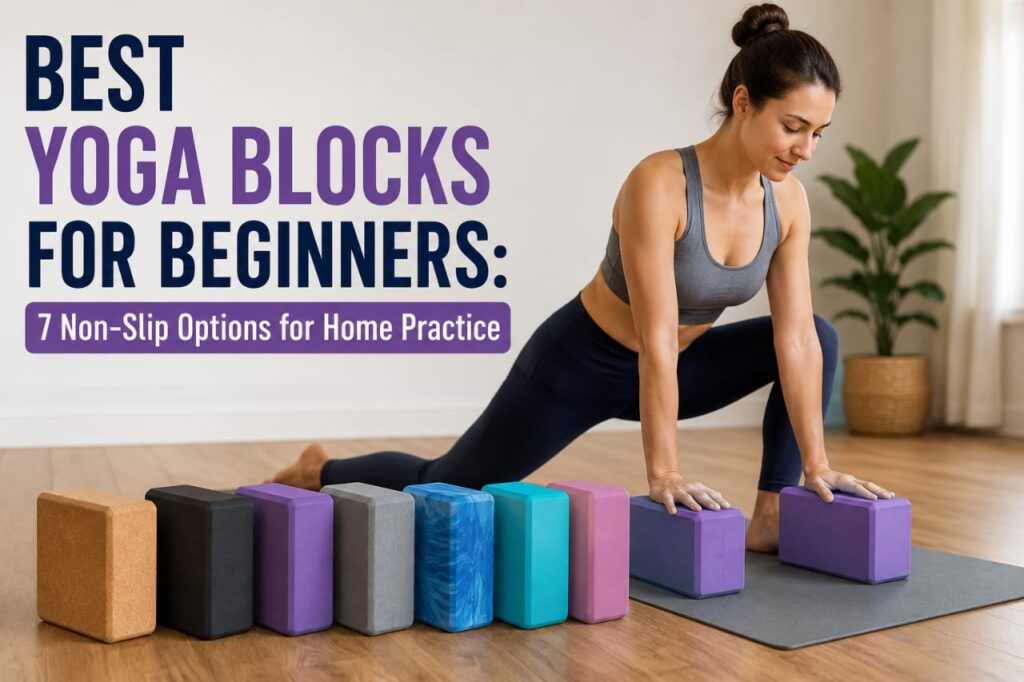
Yoga blocks can help beginners modify certain poses and make some positions easier to reach.
👉 Recommended yoga blocks:] - Yoga Strap
A yoga strap can be useful during certain stretches and may help beginners work within their current flexibility.
👉 Recommended yoga strap: - Yoga Towel
A yoga towel can be useful during longer or more active sessions, especially if you sweat.
👉 Recommended yoga towel: - Comfortable Yoga Clothing
Comfortable, flexible clothing can make it easier to move through different poses.
👉 Browse beginner-friendly yoga clothing:
Common Yoga Mistakes Beginners Should Avoid
Trying to Be Perfect
You don’t need to perform every pose perfectly when you’re starting.
Focus on learning the basic movements and developing consistency.
Pushing Too Hard
Yoga should not be about forcing your body into a position.
Work within a comfortable range and progress gradually.
Comparing Yourself With Others
Every person’s flexibility, balance, and strength are different.
Focus on your own progress.
Buying Too Much Equipment
You don’t need an entire collection of yoga products.
A yoga mat is a good place to start. Add blocks, straps, or other accessories only when they become useful.
Holding Your Breath
Remember to breathe naturally during your practice.
Slow, controlled breathing can help you stay focused and relaxed.
Frequently Asked Questions
Is yoga good for complete beginners?
Yes. Yoga can be adapted to different experience and fitness levels. Beginners should start with simple poses and gradually progress.
Can I do yoga at home?
Yes. You can practice many beginner yoga routines at home using a small, safe space and a yoga mat.
How long should a beginner practice yoga?
Starting with 10–20 minutes can be a practical option. You can gradually increase your practice time as you become more comfortable.
Do I need to be flexible to start yoga?
No. You don’t need to be flexible before starting yoga. Flexibility can develop gradually with consistent practice.
What is the most important yoga equipment for beginners?
A comfortable, non-slip yoga mat is usually the most useful place to start. Other equipment, such as blocks and straps, is optional.
Can yoga help with weight loss?
Yoga can be part of an active lifestyle, but weight management depends on several factors, including overall diet, physical activity, sleep, and energy balance.
Final Thoughts
Starting yoga doesn’t have to be complicated.
You can begin with a few simple poses, a comfortable yoga mat, and a short routine that fits your schedule.
As you become more comfortable, you can gradually explore different yoga styles and add useful equipment such as yoga blocks and straps.
The most important thing is to start slowly, practice consistently, and listen to your body.
If you’re building a home yoga setup, carefully selected beginner-friendly products can make your practice more comfortable and convenient.
👉 Start your beginner yoga setup here:
This article is for general informational purposes and is not a substitute for professional medical advice. If you have an injury, medical condition, or concerns about exercise, consider speaking with an appropriate healthcare professional before starting a new exercise routine.
u