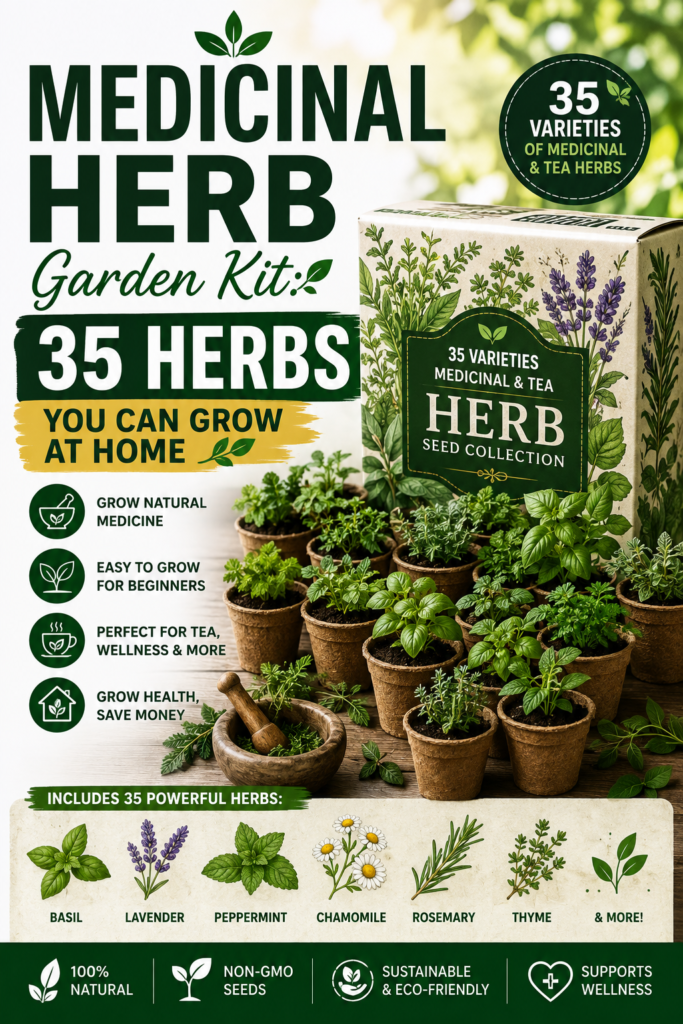
Medicinal Herb Seeds Garden Kit: 35 Herbs You Can Grow at Home
Growing your own herbs can be a simple, enjoyable, and rewarding way to make your garden more useful. A medicinal herb seeds garden kit can make it easier for beginners to start growing a variety of herbs from seeds without having to purchase dozens of individual seed packets.
Whether you have a backyard garden, a small patio, balcony, or a few containers near a sunny window, growing herbs at home can be an exciting gardening project.
In this guide, we’ll explore what a medicinal herb seeds garden kit is, why growing herbs at home can be beneficial, what to look for when choosing a kit, and 35 herbs you may be able to grow at home.
Disclosure: This article contains affiliate links. If you purchase through one of these links, we may earn a commission at no additional cost to you.
What Is a Medicinal Herb Seeds Garden Kit?
A medicinal herb seeds garden kit is a collection of different herb seeds packaged together for home gardening.
Depending on the kit, you may receive multiple varieties of seeds along with labels, planting instructions, growing information, or other gardening accessories.
These kits can be useful for beginners because you can experiment with many different herbs without buying every variety separately.
👉 Looking for a multi-variety herb seed kit? Check
[A
Why Grow Herbs at Home?
- Grow Multiple Herb Varieties
One of the biggest advantages of a multi-variety seed kit is the number of herbs you can experiment with.
Instead of planting only one type of herb, you can grow several varieties and discover which ones perform best in your garden or containers. - Great for Beginner Gardeners
Starting a garden from seeds can be a fun learning experience.
A well-organized seed kit can make the process easier by keeping different varieties together and providing information about planting and growing. - Suitable for Small Spaces
You don’t necessarily need a large backyard to grow herbs.
Many herbs can grow in containers, making them suitable for balconies, patios, windowsills, and small gardens. - Enjoy Fresh Herbs at Home
Once your herbs are mature, you may be able to harvest them for cooking, teas, fragrances, or other traditional household uses, depending on the plant. - A Fun Gardening Project
Growing herbs can also be a relaxing hobby. Watching seeds germinate and develop into mature plants can be especially rewarding for new gardeners.
35 Herbs You Can Grow at Home
A multi-variety medicinal herb seed kit may contain many different herbs. The exact contents vary by product, so always check the seed list before purchasing.
Here are 35 popular herbs that may be included in a diverse herb seed collection: - Basil
Basil is one of the most popular culinary herbs and can be grown in gardens or containers. - Peppermint
Peppermint is a fragrant herb commonly grown for its refreshing leaves and traditional use in herbal teas. - Spearmint
Spearmint is another popular mint variety that can be used in drinks, cooking, and traditional preparations. - Chamomile
Chamomile is known for its small flowers and is commonly used to prepare herbal tea. - Lavender
Lavender is a fragrant plant that can add beauty and aroma to a home garden. - Rosemary
Rosemary is a popular culinary herb that generally prefers plenty of sunlight and well-drained soil. - Thyme
Thyme is a compact herb commonly used in cooking and can work well in containers. - Sage
Sage is an aromatic herb frequently used in culinary recipes. - Oregano
Oregano is a popular Mediterranean herb used in a wide variety of dishes. - Cilantro
Cilantro is a popular culinary herb that can be grown from seed in suitable conditions. - Dill
Dill is an aromatic herb commonly used in cooking and can be grown in home gardens. - Parsley
Parsley is a versatile herb that works well in containers and garden beds. - Lemon Balm
Lemon balm is a fragrant herb from the mint family and is commonly grown in home gardens. - Catnip
Catnip is a hardy herb related to mint and can be grown in a variety of garden settings. - Fennel
Fennel is an aromatic plant known for its distinctive flavor and appearance. - Anise
Anise is an aromatic herb known for its sweet, licorice-like flavor. - Marjoram
Marjoram is a culinary herb related to oregano and is commonly used to season food. - Tarragon
Tarragon is a flavorful culinary herb often used in sauces and other recipes. - Chives
Chives are easy-to-grow herbs with a mild onion-like flavor. - Borage
Borage is an attractive herb with distinctive flowers and can be a unique addition to a garden. - Calendula
Calendula is known for its bright flowers and has a long history of traditional herbal use. - Echinacea
Echinacea is a flowering plant commonly grown in gardens and associated with traditional herbal practices. - Yarrow
Yarrow is a flowering herb that has been used traditionally in herbal practices. - Mullein
Mullein is a tall plant with soft leaves and distinctive flower stalks. - Mugwort
Mugwort is an aromatic plant with a long history of traditional use. - St. John’s Wort
St. John’s Wort is a flowering herb traditionally used in herbal preparations. - Stevia
Stevia is a plant known for its naturally sweet leaves and is sometimes grown as an alternative sweetening plant. - Hyssop
Hyssop is an aromatic herb with attractive flowers that can make an interesting addition to a garden. - Rue
Rue is a strongly scented herb that has traditionally been grown as a garden plant. - Skullcap
Skullcap is an herb associated with traditional herbal practices. - Valerian
Valerian is a flowering plant traditionally associated with herbal preparations. - Arnica
Arnica is a flowering plant commonly associated with topical herbal products. - Cumin
Cumin is an aromatic plant grown for its seeds, which are widely used as a spice. - Caraway
Caraway is an herb grown primarily for its aromatic seeds. - Balm of Gilead
Balm of Gilead is a traditional plant name associated with aromatic and herbal uses.
What to Look for in a Medicinal Herb Seeds Garden Kit
Not all seed kits are the same. Before buying one, consider the following factors.
Number of Seed Varieties
If variety is important to you, look for a kit that clearly lists the number and names of the included seeds.
A kit containing many varieties can be useful if you want to experiment with different herbs.
Seed Quality
Look for clearly labeled seed packets and information about the individual varieties.
Pay attention to packaging, expiration information when provided, and seller details.
Planting Instructions
For beginners, clear instructions can be very helpful.
A good kit may provide information about planting depth, watering, sunlight, spacing, and germination.
Organization
When a kit contains dozens of varieties, organization matters.
Individually labeled packets can make it much easier to identify each herb and keep track of what you have planted.
Climate and Growing Conditions
Before purchasing, consider whether the herbs included are suitable for your local growing conditions.
Some herbs prefer full sunlight, while others may tolerate partial shade.
How to Grow Herbs From Seeds - Choose the Right Soil
Use clean, well-draining soil suitable for starting seeds.
Good drainage is important because constantly wet soil can cause problems for young seedlings. - Choose a Suitable Location
Most herbs need adequate light to grow successfully.
If you’re growing outdoors, choose a location that provides the amount of sunlight required by the specific herb. - Follow the Seed Instructions
Different herbs have different planting requirements.
Follow the instructions provided with your seeds whenever available. - Water Carefully
Keep the soil appropriately moist without overwatering.
Young seedlings can be sensitive to excessive moisture. - Label Each Plant
If you’re growing many herbs at once, labels are extremely useful.
Write down the herb name and planting date so you know exactly what you’re growing. - Be Patient
Not every herb germinates at the same speed.
Some seeds may sprout quickly, while others can take longer depending on the variety and growing conditions.
Growing Herbs in Containers
You don’t need a large garden to grow herbs.
Containers can be an excellent option for beginners or anyone with limited outdoor space.
Choose containers with drainage holes and use appropriate potting soil. Make sure each plant has enough room to grow.
You can also place several containers together to create a small home herb garden.
If you live in an apartment or have a small balcony, container gardening can be a practical way to experiment with different herbs.
Is a 35-Variety Herb Seed Kit Worth It?
A 35-variety seed kit can be worth considering if your main goal is variety.
Instead of purchasing many separate seed packets, you can start with one collection and experiment with different plants.
However, the value depends on the quality of the seeds, the actual varieties included, the planting instructions, and whether the plants are suitable for your growing conditions.
🌿 Ready to start your herb garden? Check the available medicinal herb seed kits on Amazon. (paid link)
Are Medicinal Herbs Safe to Consume?
It’s important to understand that the word “medicinal” does not automatically mean that an herb is safe or effective for treating a medical condition.
Some herbs can interact with medications or cause unwanted effects. Others may not be appropriate for children, pregnant or breastfeeding people, or individuals with certain health conditions.
For that reason, don’t consume an unfamiliar plant simply because it is included in a seed kit.
Correctly identify the plant and research its intended use and safety before consuming it.
If you plan to use herbs for a health-related purpose, consider speaking with a qualified healthcare professional.
Best Uses for a Home Herb Garden
A home herb garden can be useful for several purposes.
Cooking
Many herbs such as basil, rosemary, thyme, oregano, parsley, dill, and chives are popular cooking ingredients.
Herbal Tea
Some herbs are traditionally used to make herbal teas, including peppermint, chamomile, lemon balm, and others.
Garden Decoration
Flowering herbs such as lavender, calendula, echinacea, and borage can add color and visual interest to a garden.
Gardening Experience
Growing from seeds can help beginners learn about plant care, soil, watering, sunlight, and harvesting.
Final Thoughts
A Medicinal Herb Seeds Garden Kit can be a convenient and enjoyable way to start growing a wide variety of herbs at home.
With a collection of up to 35 varieties, you can experiment with herbs such as basil, rosemary, peppermint, chamomile, lavender, thyme, oregano, calendula, echinacea, and many others.
Before buying a kit, compare the number of varieties, seed quality, labeling, planting instructions, packaging, and suitability for your climate.
If you’re new to gardening, start with a few easy-to-grow herbs and gradually expand your collection as you gain experience.
🌱 Start your home herb garden today. Check here the Medicinal Herb Seeds Garden Kit on Amazon. (paid link)
Amazon Affiliate Disclosure
As an Amazon Associate I earn from qualifying purchases