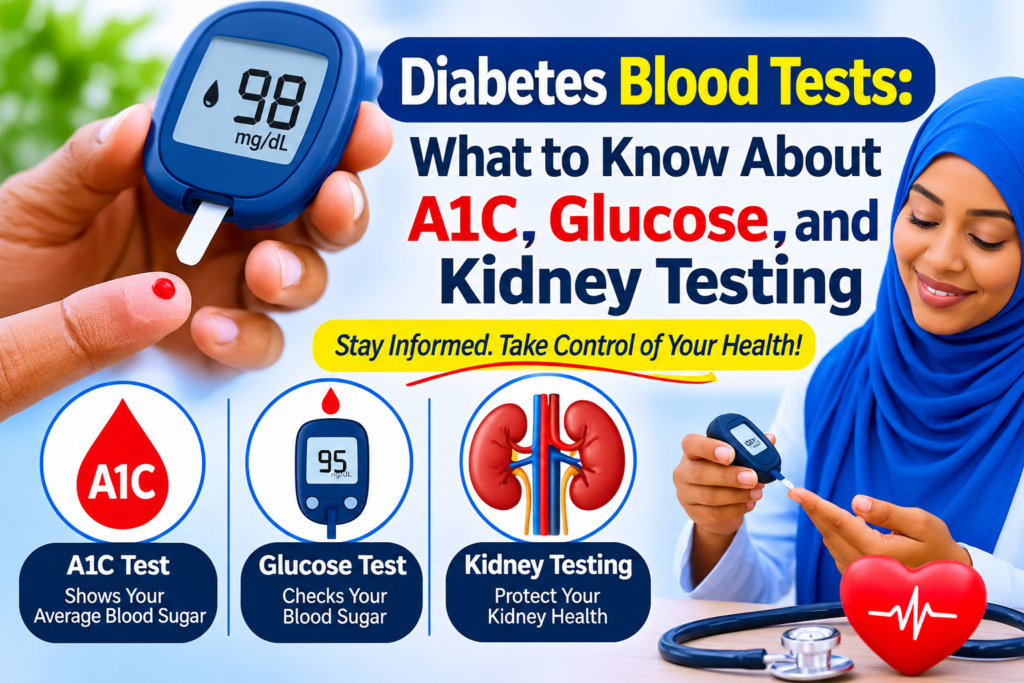
Diabetes can affect blood sugar levels and may increase the risk of kidney problems over time. Regular medical testing helps people with diabetes understand their health and make informed decisions with their healthcare professionals.
Three important areas to understand are the A1C blood test, blood glucose testing, and kidney function testing.
In this article, we explain these tests and introduce useful products that may help you manage your daily health routine.
What Is an A1C Blood Test?
The A1C test, also called HbA1c, measures the percentage of hemoglobin in your blood that has glucose attached to it. It provides an estimate of your average blood sugar over approximately the previous three months.
Healthcare professionals use this test to help diagnose diabetes and monitor blood sugar management.
Why Is the A1C Test Important?
Helps monitor long-term blood sugar levels.
Helps healthcare professionals assess diabetes management.
Supports decisions about treatment when interpreted alongside other health information.
A1C targets vary depending on individual health circumstances. Ask your healthcare professional what result is appropriate for you.
What Is a Blood Glucose Test?
A blood glucose test measures the amount of sugar in your blood at a particular time.
Some tests are performed in a laboratory, while glucose meters allow certain people with diabetes to check their blood sugar at home.
Benefits of Blood Glucose Monitoring
Helps identify high or low blood sugar.
Shows how meals and physical activity may affect glucose levels.
Supports diabetes management plans.
Provides useful information for discussions with healthcare professionals.
The frequency of testing depends on your diabetes type, treatment, and medical advice.
Why Are Kidney Tests Important for People With Diabetes?
Diabetes can damage the kidneys over time. Early kidney disease may develop without noticeable symptoms, which makes recommended screening important.
Two common kidney tests are:
eGFR: Estimates how effectively your kidneys filter waste from your blood. It is usually calculated using a blood creatinine measurement.
UACR: Measures the amount of albumin relative to creatinine in a urine sample. Increased urine albumin can be a sign of kidney damage.
These tests provide different information about kidney health. Healthcare professionals may recommend both tests to people with diabetes.
Useful Products for Diabetes Management
The following products may help with daily monitoring and organization. They do not replace laboratory tests, medical advice, or prescribed treatment.
Blood Glucose Meter
A blood glucose meter measures blood sugar using a small blood sample. It may be useful for people who have been advised to monitor their glucose at home check the price Explore Blood Glucose Meters
Blood Glucose Test Strips
Test strips are used with compatible glucose meters. Always check that the strips match your meter and have not expired.: Check Compatible Test Strips
Diabetes Management Organizer
A health organizer can help you record glucose readings, medication schedules, medical appointments, and questions for your healthcare professional. : check the price View Diabetes Management Tools
Pill Organizer
A pill organizer can help some people keep track of their prescribed medication routine.
Check the price Explore Pill Organizers
Only include products available through your actual CJ Affiliate partners. Never claim that these products cure or treat diabetes or kidney disease.
Frequently Asked Questions
Which Blood Tests Are Important for Diabetes?
Common tests include A1C, blood glucose, eGFR, and urine albumin testing. Your healthcare professional can advise which tests you need and how often.
Can an A1C Test Detect Kidney Disease?
No. The A1C test measures average blood sugar. Kidney assessment commonly involves eGFR and urine albumin testing.
Can Kidney Problems Develop Without Symptoms?
Yes. Early kidney disease may have no obvious symptoms. Regular screening can help identify potential problems earlier.
Can Home Glucose Meters Replace Laboratory Blood Tests?
No. Home glucose meters help monitor blood sugar, but they do not replace A1C testing or kidney function tests recommended by a healthcare professional.
Final Thoughts
Understanding diabetes blood tests, including A1C, blood glucose, and kidney testing, can help you make informed decisions about your health.
Regular screening, appropriate medical care, and following your treatment plan are important parts of diabetes management. Home monitoring products can help organize your routine, but they cannot replace professional healthcare.
Speak with your healthcare professional about the tests that are appropriate for you.
Affiliate Disclosure
Muzamill1.com may earn a commission when you purchase products through our affiliate links, at no additional cost to you. We aim to recommend products relevant to our reader