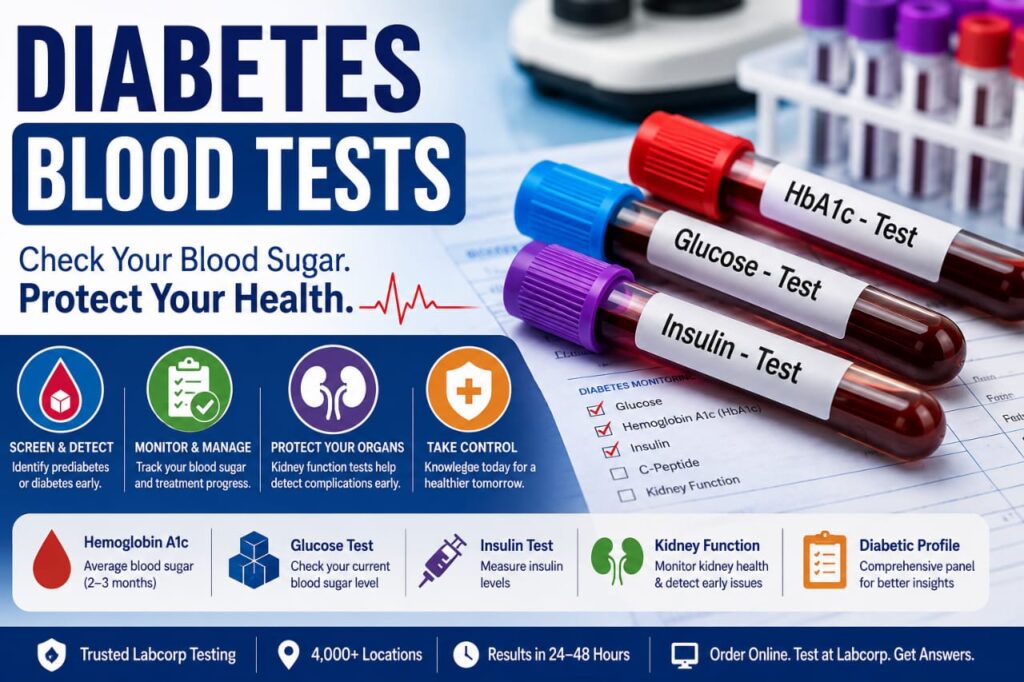
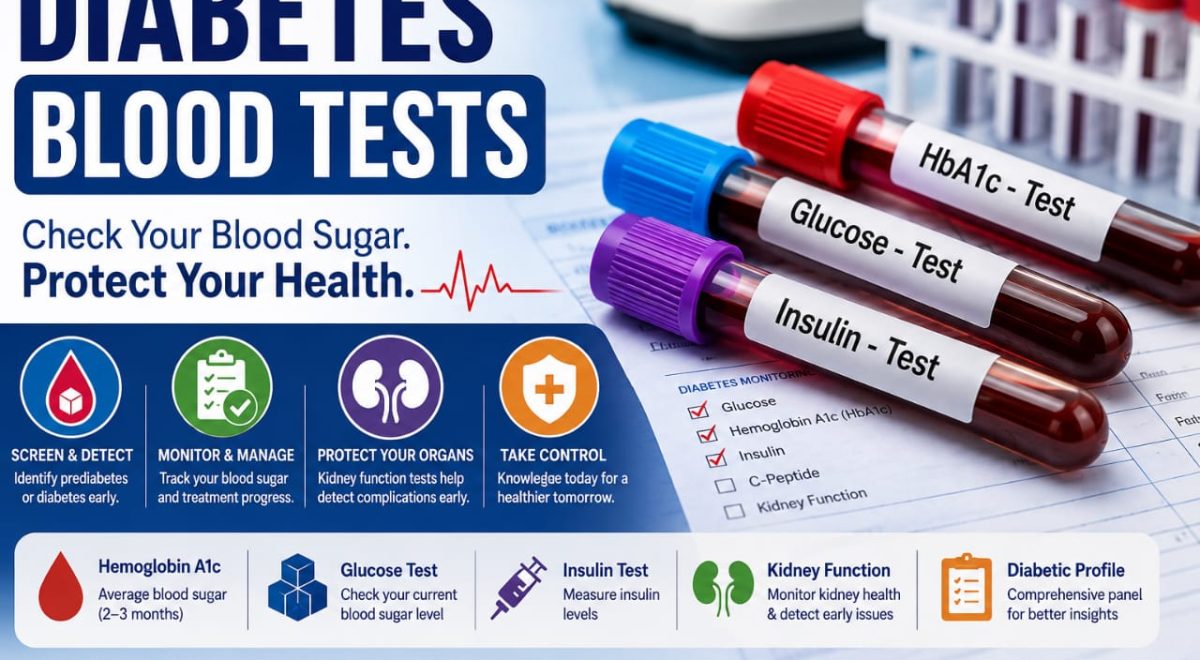
If you are concerned about blood sugar, prediabetes, diabetes, or diabetes-related kidney problems, diabetes blood tests can provide important information about your health.
Diabetes can develop gradually, and some people may not notice symptoms at first. Regular testing can help identify abnormal blood sugar levels and give you useful information to discuss with a healthcare professional. The CDC recommends regular kidney testing for people with diabetes because chronic kidney disease can develop with few early symptoms.
What Are Diabetes Blood Tests?
Diabetes blood tests are laboratory tests used to measure blood glucose, average blood sugar, insulin-related markers, and other measurements that can help evaluate metabolic health.
Some common tests include:
Hemoglobin A1C
Fasting glucose
Glucose blood test
Insulin testing
Comprehensive diabetes panels
Kidney function tests
Urine albumin-to-creatinine testing
Different tests provide different types of information, so the right test depends on your health history and what you are trying to evaluate.
- Hemoglobin A1C Test
The A1C test is one of the most commonly used diabetes blood tests.
Unlike a blood glucose test that shows your blood sugar at a particular moment, A1C provides an estimate of your average blood sugar over approximately the previous three months.
According to the CDC:
Below 5.7% — generally considered normal
5.7%–6.4% — generally considered prediabetes
6.5% or higher — generally in the diabetes range
A diagnosis should be made by a qualified healthcare professional and may require repeat testing depending on the situation. - Fasting Glucose Test
A fasting glucose test measures blood sugar after fasting.
The CDC lists these general ranges:
99 mg/dL or below — normal
100–125 mg/dL — prediabetes range
126 mg/dL or above — diabetes range
Your healthcare professional can explain what your individual result means and whether additional testing is necessary. - Diabetes and Kidney Health
Blood sugar is not the only area worth monitoring.
Diabetes is a major risk factor for chronic kidney disease. High blood sugar over time can damage the small blood vessels and filtering structures in the kidneys. Unfortunately, kidney disease can develop without obvious symptoms during its early stages.
That is why kidney testing can be particularly important for people who have diabetes.
Common kidney-related tests include:
Serum creatinine
Estimated GFR
Blood urea nitrogen (BUN)
Urine albumin testing
Albumin-to-creatinine ratio
The CDC notes that urine albumin-to-creatinine testing can help identify protein leaking into the urine, which may be an early sign of kidney disease. - Where Can You Get Diabetes Blood Tests?
If you are looking for convenient laboratory testing, Personalabs offers several diabetes blood tests that can be ordered online.
Its current diabetes testing selection includes tests such as:
Hemoglobin A1C Blood Test
Diabetic Profile Blood Test
Insulin, Free and Total Blood Test
Renal Function Panel
Glucose, Serum Blood Test
Microalbumin/Creatinine Ratio
Comprehensive metabolic testing
Personalabs says its testing is fulfilled through Labcorp locations and currently lists more than 4,000 patient service centers nationwide.
👉 Check Personalabs Diabetes Blood Tests:
View Diabetes Blood Tests at Personalabs - Who May Consider Diabetes Testing?
Diabetes testing may be worth discussing with a healthcare professional if you:
Have a family history of diabetes
Have previously been told you have prediabetes
Have symptoms associated with high blood sugar
Have risk factors for type 2 diabetes
Already have diabetes and need regular monitoring
Have concerns about kidney health
Personalabs also notes that testing can be relevant for people with a family history of diabetes or kidney/adrenal conditions. - Diabetes Testing Before or During GLP-1 Treatment
People considering or using GLP-1 medications may also encounter laboratory testing as part of their healthcare.
Personalabs currently highlights A1C, comprehensive metabolic testing, and lipid testing among tests that may be used when establishing a baseline or monitoring treatment.
However, laboratory requirements can vary between individuals and medications. Always follow the testing and monitoring recommendations of your healthcare provider.
How Often Should You Test?
There is no single testing schedule that is right for everyone.
For people with diabetes, the CDC says A1C is commonly checked at least twice a year, although some people may need testing more frequently depending on their treatment and health situation.
Your healthcare professional can recommend an appropriate schedule based on your individual circumstances.
Final Thoughts
Diabetes blood tests can help you understand your blood sugar levels and provide useful information for conversations with your healthcare professional.
An A1C test can show your average blood sugar over the previous few months, while fasting glucose measures blood sugar at a specific point in time. For people with diabetes, kidney testing can also be important because chronic kidney disease may develop without obvious early symptoms.
If you are looking for convenient laboratory testing in the United States, you can explore the diabetes and kidney testing options available through Personalabs.
👉 Explore Personalabs Diabetes & Kidney Tests:
See Available Tests
Medical Disclaimer
This article is for educational and informational purposes only. It is not medical advice and does not diagnose or treat any condition. Talk with a qualified healthcare professional about your symptoms, test results, medications, and appropriate testing schedule.